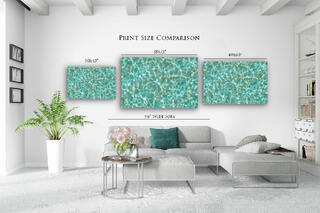
The Best Art for Dining Rooms: How to Create a Beautiful Space for Entertaining
A dining room is about much more than sitting down for a meal. It's where friends gather, families celebrate, conversations linger, and some of our favorite memories are made.
That makes the dining room one of the best places in your home to display artwork with personality.
The right dining room wall art can completely change the atmosphere of the space, adding color, warmth, depth, and a focal point that brings the entire room together. Whether you're designing a formal dining room, a modern open-concept space, or a relaxed coastal home, thoughtfully selected artwork can make the room feel more inviting and complete.
Here's how to choose wall art for your dining room that complements your space while creating an atmosphere you'll enjoy every time you sit down at the table.
What Type of Art Is Best for a Dining Room?
Unlike a bedroom, where the goal is usually to create a quiet and restful environment, dining rooms can handle artwork with more energy.
Colorful sunsets, dramatic landscapes, ocean photography, tropical scenes, abstract nature photography, and panoramic landscapes can all work beautifully.
Some of my favorite subjects for dining room artwork include:
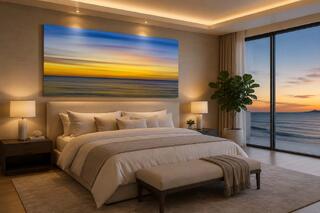
- Colorful sunsets and sunrises
- Ocean and coastal landscapes
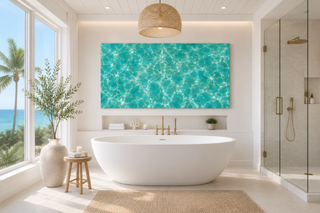
- Abstract water photography
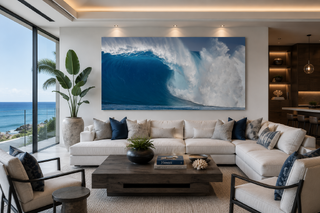
- Dramatic waves
- Tropical landscapes
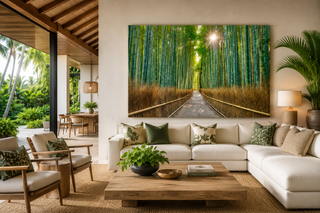
- Mountains and forests
- Palm trees
- Panoramic landscapes
- Black-and-white photography
The most important consideration is how the artwork makes you feel.
A dining room is a social space, so don't be afraid to choose something that immediately captures attention and starts a conversation.
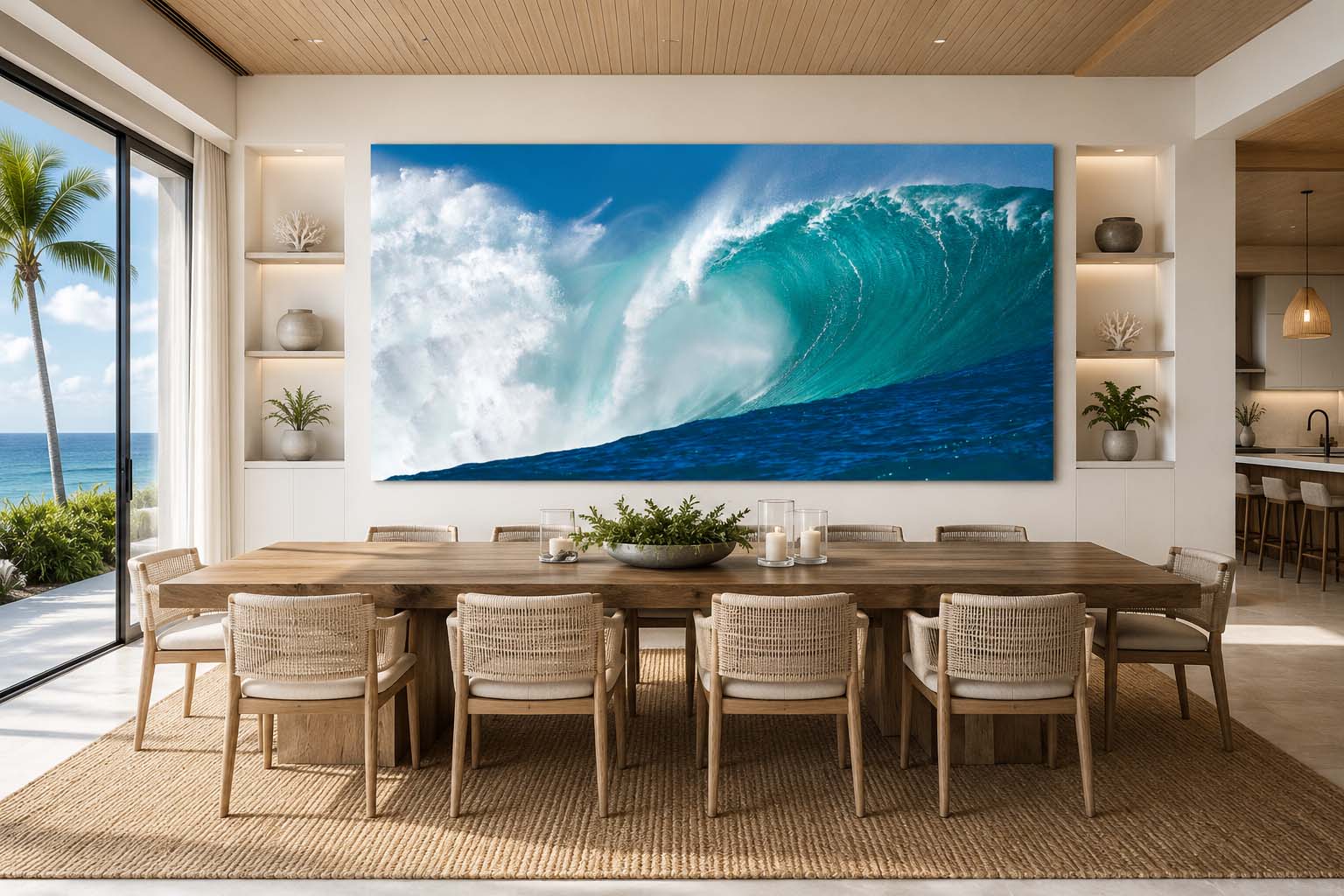
Make the Artwork a Conversation Piece
Great artwork has a way of making people stop and look.
That's especially valuable in a dining room.
A dramatic landscape or unusual perspective can naturally become a conversation piece when friends and family gather around the table.
Maybe it's an enormous wave photographed just before it breaks. Perhaps it's an abstract aerial view of turquoise Hawaiian water. Or it could be a glowing Maui sunset that reminds you of a favorite vacation.
The photograph doesn't necessarily need to match the room perfectly.
It should add something to it.
Choose artwork that makes you want to look closer or tells a story you'd enjoy sharing with your guests.
Create a Focal Point
Most dining rooms benefit from one strong visual focal point.
The dining table itself naturally anchors the center of the room, while a large piece of artwork can anchor the surrounding walls.
A substantial photograph displayed behind or beside the dining table immediately gives your eye somewhere to go when you enter the room.
This is especially effective in minimalist interiors where there may be relatively few decorative objects.
Instead of filling the room with accessories, one beautiful piece of statement art for the dining room can provide much of the personality the space needs.
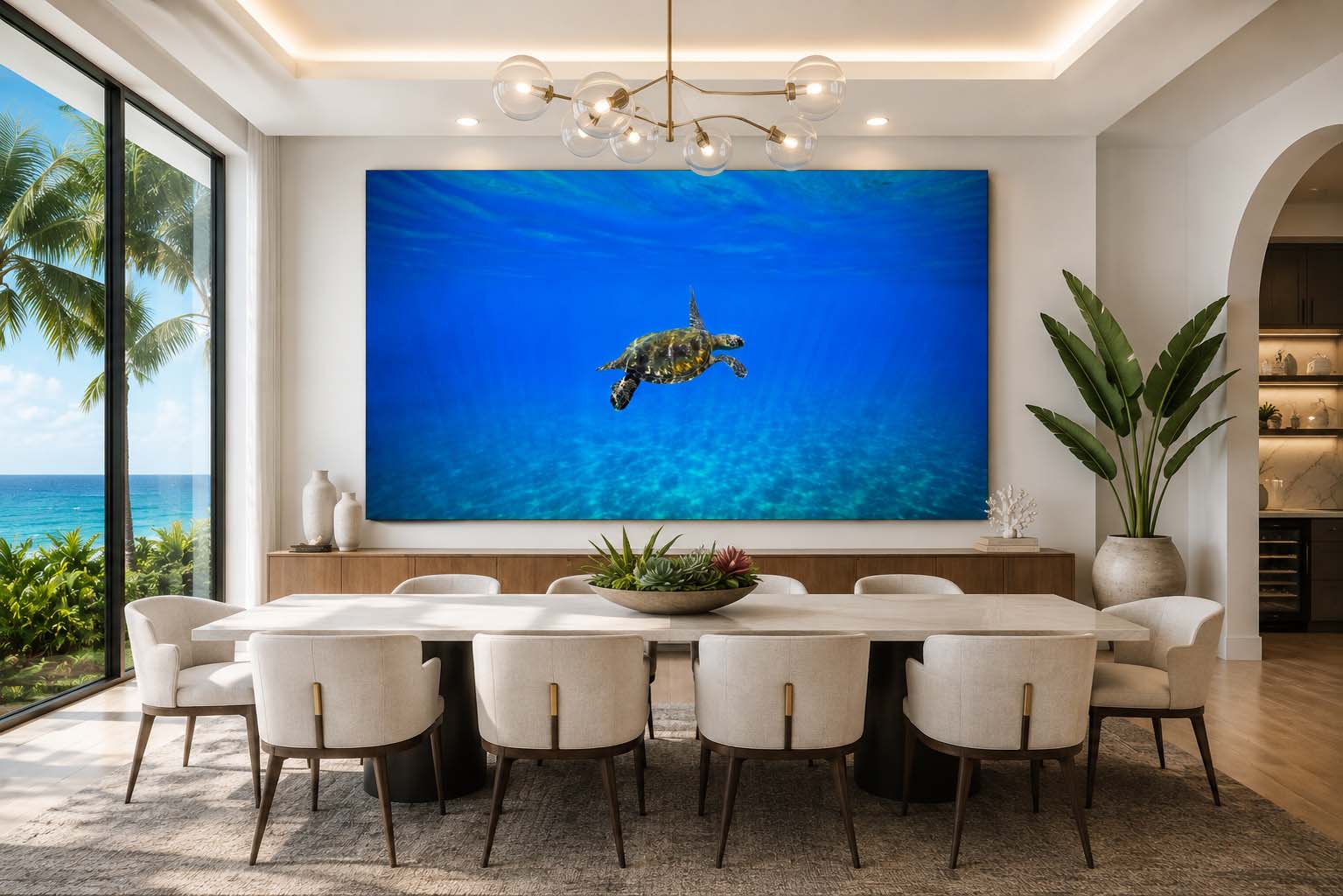
Go Bigger Than You Think
One of the most common decorating mistakes I see is artwork that's simply too small for the wall.
Dining rooms often have long, uninterrupted walls, making them ideal for large-format photography.
A small print centered on a large wall can feel disconnected from the dining table and furniture below it. Large dining room wall art creates visual weight and helps the artwork feel integrated into the architecture of the room.
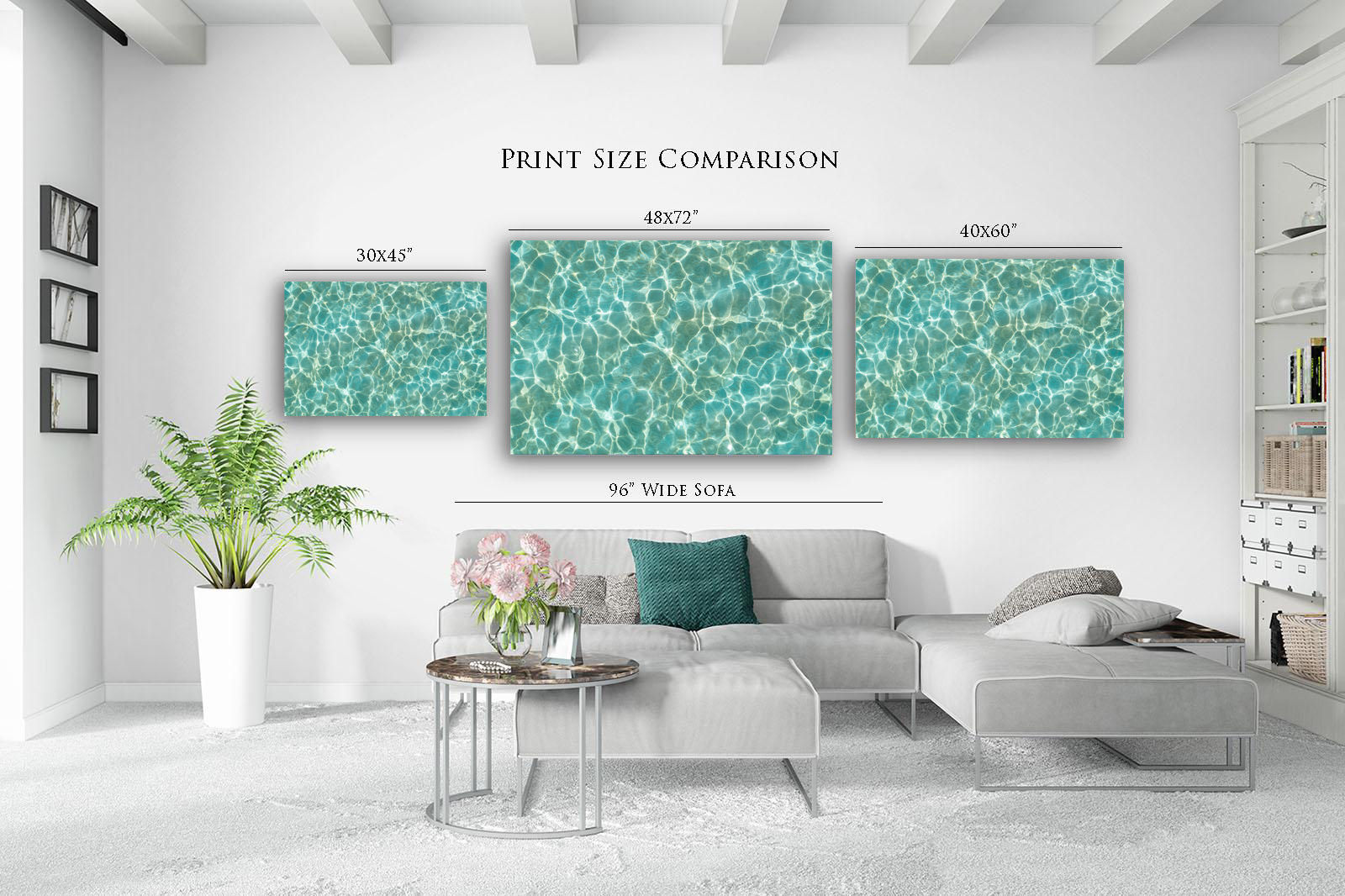
Depending on your space, popular statement sizes might include:
- 40 × 60 inches
- 45 × 60 inches
- 48 × 72 inches
- 60 × 90 inches
- 30 × 60 panoramic
- 40 × 80 panoramic
Large open-concept homes, vaulted ceilings, and expansive dining rooms can often accommodate even larger artwork.
When deciding between two sizes, I usually recommend considering the larger option. Properly scaled artwork tends to make a room feel more intentional and luxurious.
What Size Art Should Go Above a Dining Table?
If you're hanging artwork on a wall directly behind a dining table, think about the relationship between the artwork and the furniture rather than the wall alone.
As a general starting point, artwork can often look balanced when its width is approximately two-thirds to three-quarters the width of the furniture or visual area beneath it.
The exact size depends on your room, table, ceiling height, and surrounding architecture, but the goal is to make the artwork feel connected to the dining area rather than floating by itself on the wall.
Long dining tables are also perfect for panoramic photography.
A wide coastal landscape or abstract ocean panorama can mirror the horizontal proportions of the table and create a beautiful sense of balance.
Panoramic Art Works Beautifully in Dining Rooms
Dining rooms are one of my favorite places for panoramic photography.
Because dining tables are naturally long and horizontal, panoramic artwork often feels perfectly proportioned above or alongside them.
An expansive coastline, mountain range, ocean abstract, or dramatic sunset can stretch across the wall without requiring excessive height.
Panoramic artwork is also particularly effective in open-concept homes because it can visually define the dining area without adding walls or architectural divisions.
The artwork essentially gives the dining space its own identity.
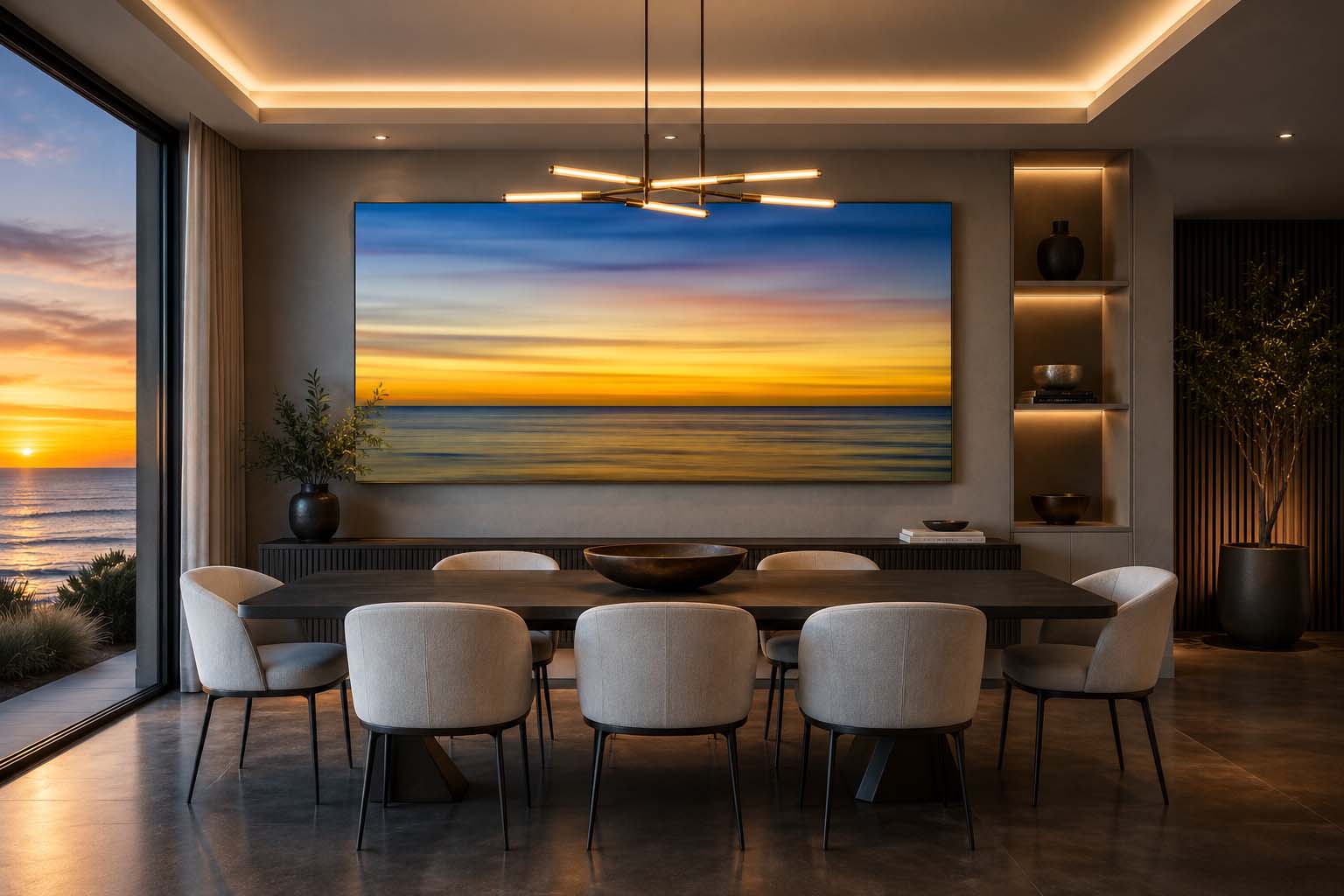
Use Color to Establish the Mood
Color can dramatically influence the atmosphere of a dining room.
Warm colors such as gold, orange, red, and soft sunset tones can create an inviting atmosphere that's perfect for entertaining.
Ocean blues and turquoise can make the room feel fresh, open, and relaxed.
Deep blues and darker landscapes can create a more dramatic, sophisticated environment—particularly when paired with warm evening lighting.
Greens from forests and tropical landscapes work beautifully with natural wood furniture and organic materials.
Instead of matching your artwork exactly to your furniture, look for one or two colors within the photograph that can be repeated elsewhere in the room.
A subtle connection through upholstery, a rug, centerpiece, or decorative accent can make the entire space feel cohesive.
Coastal Dining Room Wall Art
Coastal photography works particularly well in dining rooms because it adds color and movement without making the space feel overly decorated.
A large ocean photograph can bring the feeling of the coast indoors while maintaining a sophisticated aesthetic.
For a contemporary coastal dining room, try pairing coastal dining room wall art with:
- Natural wood
- Linen upholstery
- Light stone
- Neutral walls
- Woven textures
- Soft architectural lighting
- Minimal décor
Rather than relying on literal beach-themed decorations, one exceptional photograph of the ocean can establish the entire coastal atmosphere.
Abstract ocean photography and aerial beach imagery are especially effective in modern dining spaces because the patterns and movement of the water can almost feel like abstract paintings.
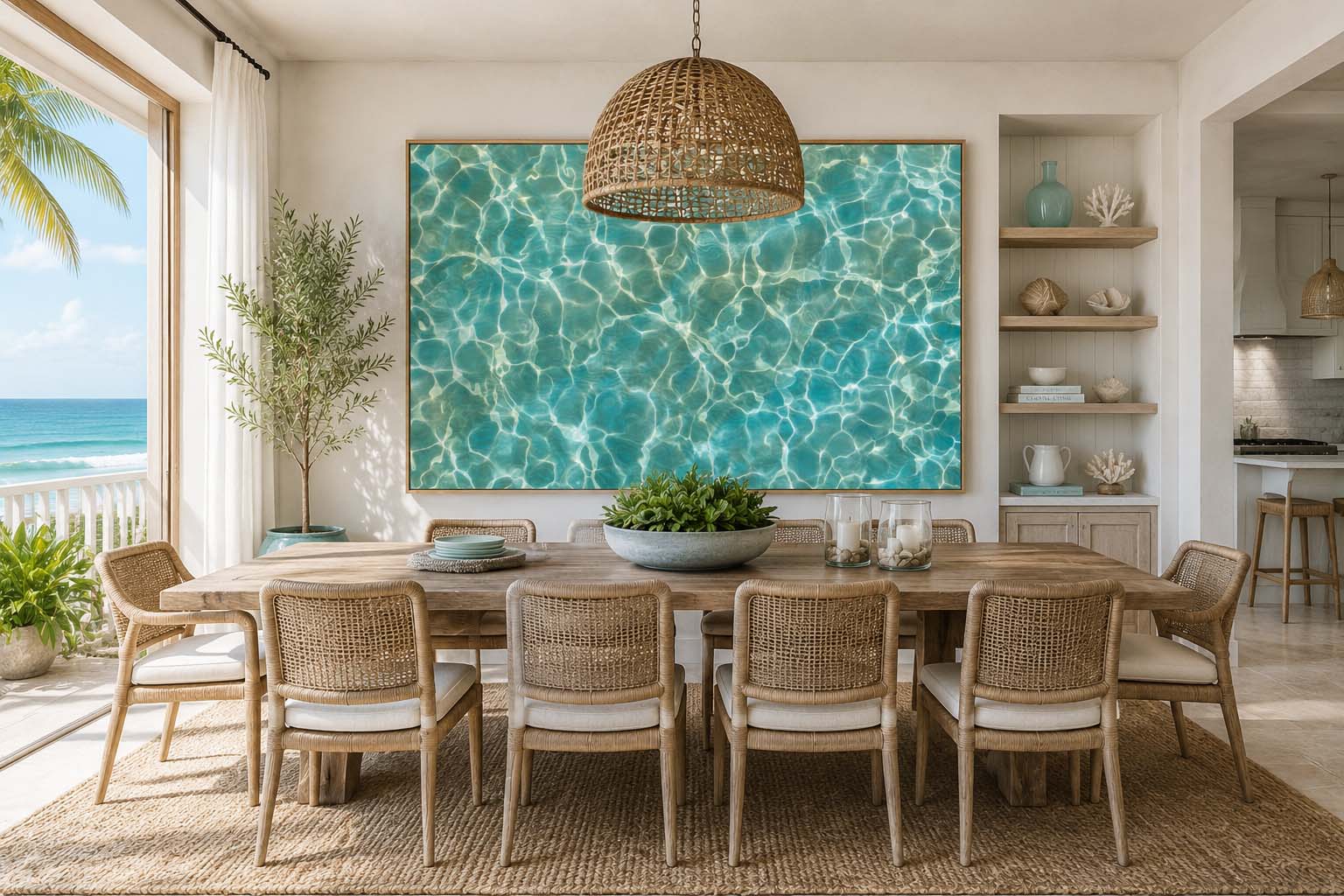
Modern Dining Room Wall Art
Modern interiors often benefit from restraint.
Clean architecture, simple furniture, and minimal accessories create the perfect environment for one dramatic piece of artwork.
In a modern dining room, a large photograph can introduce color and organic texture while maintaining the clean aesthetic of the space.
Abstract landscapes, aerial ocean photography, minimalist seascapes, and panoramic images work particularly well because they complement contemporary architecture without making the room feel busy.
A frameless Acrylic Facemount or HD Metal Print can reinforce that clean, architectural appearance.
Creating a Luxury Dining Room
A luxurious dining room doesn't need to be overly formal.
Some of the most beautiful spaces combine simple materials with exceptional individual elements.
Consider pairing luxury dining room wall art with:
- A substantial wood or stone dining table
- Comfortable upholstered chairs
- Natural materials
- A sculptural chandelier
- Warm accent lighting
- Neutral walls
- Minimal accessories
- One dramatic piece of fine art
The goal is to allow each element enough space to breathe.
One exceptional photograph can often have more impact than a wall filled with smaller decorative pieces.
One Large Piece or Several Smaller Pieces?
Both approaches can work, but they create very different effects.
A collection of smaller pieces can feel eclectic and personal, particularly in traditional or casual dining rooms.
One large statement piece tends to create a cleaner, more contemporary and luxurious appearance.
For my photography, I particularly love the impact of one oversized image because it allows the viewer to experience the landscape at a scale closer to being there.
At 60, 72, or even 90 inches wide, an ocean or landscape photograph becomes less like an object hanging on the wall and more like another view from the room.
Acrylic, Metal, or Canvas for a Dining Room?
The print medium can have a significant effect on the final appearance of the artwork.
Acrylic Facemounts
Acrylic Facemounts provide exceptional depth, detail, and vibrant color. They're particularly striking with sunsets, tropical landscapes, ocean photography, and images where you want maximum visual impact.
HD Metal Prints
HD Metal Prints provide beautiful color and remarkable detail with a clean, contemporary presentation. They work especially well in modern dining rooms and minimalist interiors.
Canvas Facemounts
Canvas Facemounts provide a softer, more organic appearance with minimal glare. They pair beautifully with natural wood furniture, warm interiors, and spaces where you'd like the artwork to feel slightly more understated.
The best medium ultimately depends on the photograph, your interior style, and the lighting in the room.
Lighting Can Completely Change the Artwork
Dining rooms are often experienced very differently during the day and at night.
During the day, natural light may illuminate the artwork and reveal subtle colors and details.
At night, thoughtful accent lighting can completely change the mood.
Adjustable recessed lights or dedicated art lighting can make a photograph glow against the wall while creating a warm atmosphere for dinner.
If you're designing or renovating a dining room, consider artwork lighting early in the process. Properly positioned lighting can make a dramatic difference in how the piece looks after sunset.
Choose Artwork That Means Something to You
Design guidelines are useful, but artwork shouldn't be chosen simply because it matches your dining chairs.
The best art creates an emotional connection.
Perhaps a Maui sunset reminds you of where you were married.
Maybe an ocean photograph brings back memories of family vacations in Hawaii.
A dramatic mountain landscape might remind you of a place you've always wanted to return to.
Or perhaps you simply saw an image and immediately felt something.
That's enough.
Your dining room is a place where memories are created. Surrounding yourself with artwork that already holds meaning makes the room even more personal.
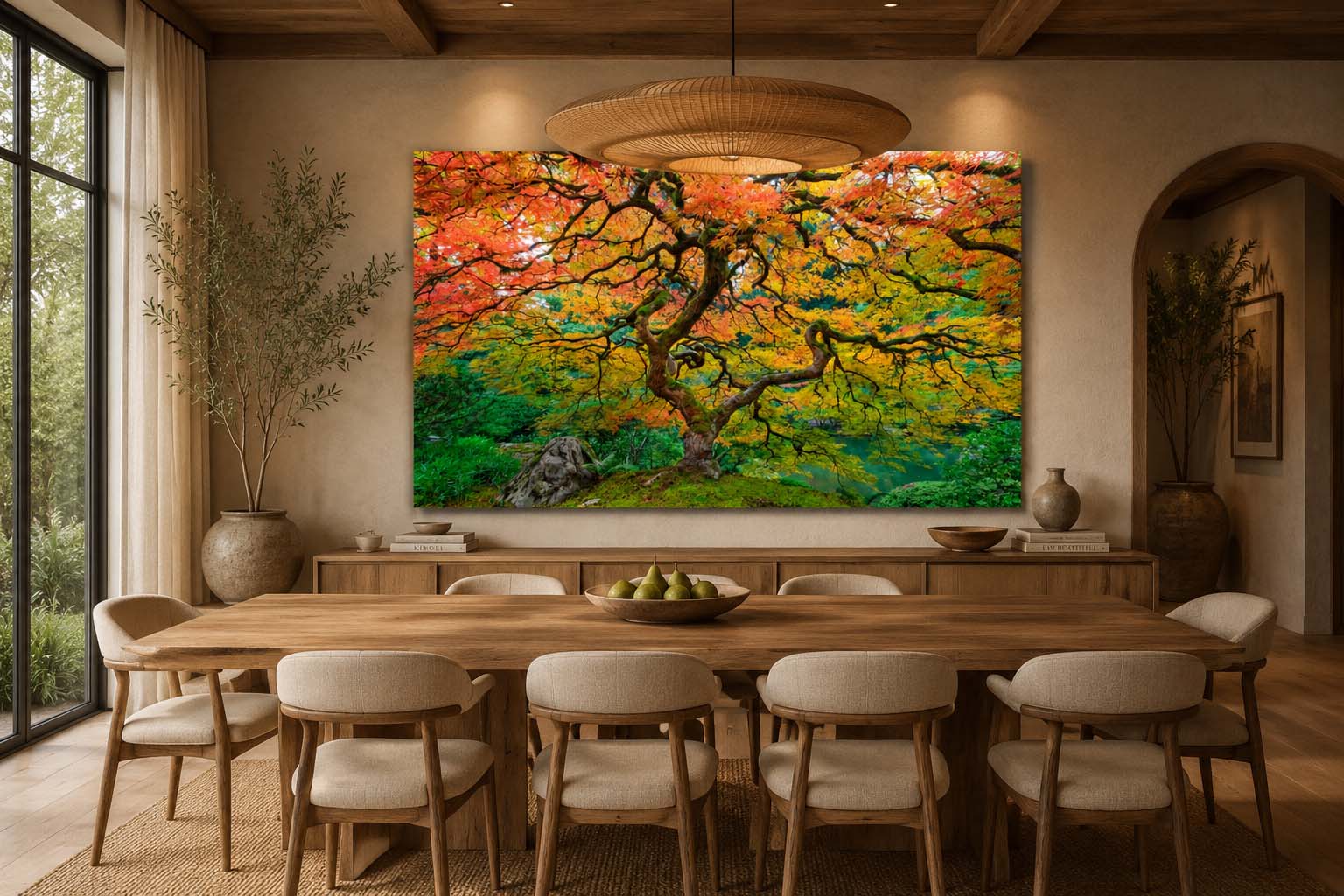
See the Artwork in Your Dining Room Before You Buy
Choosing a large piece of artwork can be difficult when you're trying to imagine how a photograph will look at 60 or 72 inches wide.
That's why I offer complimentary digital wall previews.
Send me a photograph of your dining room along with the approximate dimensions of the wall, and I can show you how different photographs and sizes will look in your actual space.
This allows you to compare different images, experiment with sizes, and see how the artwork interacts with your dining table, furniture, wall color, and surrounding décor before ordering.
Frequently Asked Questions About Dining Room Wall Art
What type of art is best for a dining room?
Dining rooms are ideal for artwork with personality, color, and visual impact. Landscapes, ocean photography, colorful sunsets, abstract nature photography, panoramic scenes, and dramatic black-and-white photography can all work beautifully. Because the dining room is a social space, it's also a great place to choose artwork that creates conversation.
What size artwork should I hang in a dining room?
The ideal size depends on the wall, dining table, ceiling height, and surrounding furniture. As a general starting point, artwork displayed in relation to furniture often looks balanced when it's approximately two-thirds to three-quarters the width of the furniture or visual area beneath it. Large dining rooms and open-concept spaces can often accommodate artwork 60, 72, 90 inches wide or even larger.
What size art should go above a dining table?
Artwork above or behind a dining table should feel visually connected to the table rather than appearing too small or floating on the wall. A piece approximately two-thirds to three-quarters the width of the dining table or surrounding furniture is often a useful starting point. Long tables are especially well suited to panoramic artwork.
What colors work best for dining room wall art?
Warm sunset tones such as gold, orange, and red can create an inviting atmosphere, while ocean blues and turquoise produce a more relaxed coastal feeling. Greens pair beautifully with natural wood, while darker blues and dramatic landscapes can create a sophisticated atmosphere for evening entertaining. Choose colors that complement your room rather than trying to match everything exactly.
Is one large piece of art better than several smaller pieces in a dining room?
For modern and luxury dining rooms, one large statement piece often creates a cleaner and more dramatic appearance. Several smaller pieces can work beautifully in traditional or eclectic spaces, but oversized artwork can establish a stronger focal point while reducing visual clutter.
Are panoramic photographs good for dining rooms?
Yes. Dining rooms are particularly well suited to panoramic photography because the horizontal proportions of a panorama naturally complement long dining tables and sideboards. Panoramic ocean scenes, coastlines, mountains, and abstract landscapes can create a dramatic focal point without requiring excessive wall height.
What artwork works best in a coastal dining room?
Ocean photography, aerial beach imagery, tropical landscapes, palm trees, and abstract water photography are excellent choices for coastal dining rooms. Pairing coastal artwork with natural wood, linen, stone, neutral walls, and organic textures creates a sophisticated coastal look without relying on literal beach-themed décor.
Should dining room artwork match the furniture?
Not exactly. Artwork should complement the overall room rather than perfectly match it. Look for subtle relationships between colors in the photograph and your furniture, rug, lighting, or accessories. Repeating one or two colors from the artwork elsewhere in the room can create cohesion while allowing the artwork to remain the focal point.
How should dining room artwork be lit?
Adjustable recessed lighting or dedicated art lights can beautifully illuminate dining room artwork, particularly in the evening. Position lighting so it falls onto the front of the artwork without creating distracting reflections or harsh shadows. Warm accent lighting can make both the artwork and dining space feel more inviting.
Can I preview artwork in my dining room before ordering?
Absolutely. I offer complimentary digital wall previews that allow you to see different photographs and sizes in your actual dining room before ordering. Send me a photograph of the room along with the approximate wall dimensions, and I can help you compare images and determine which size works best for your space.
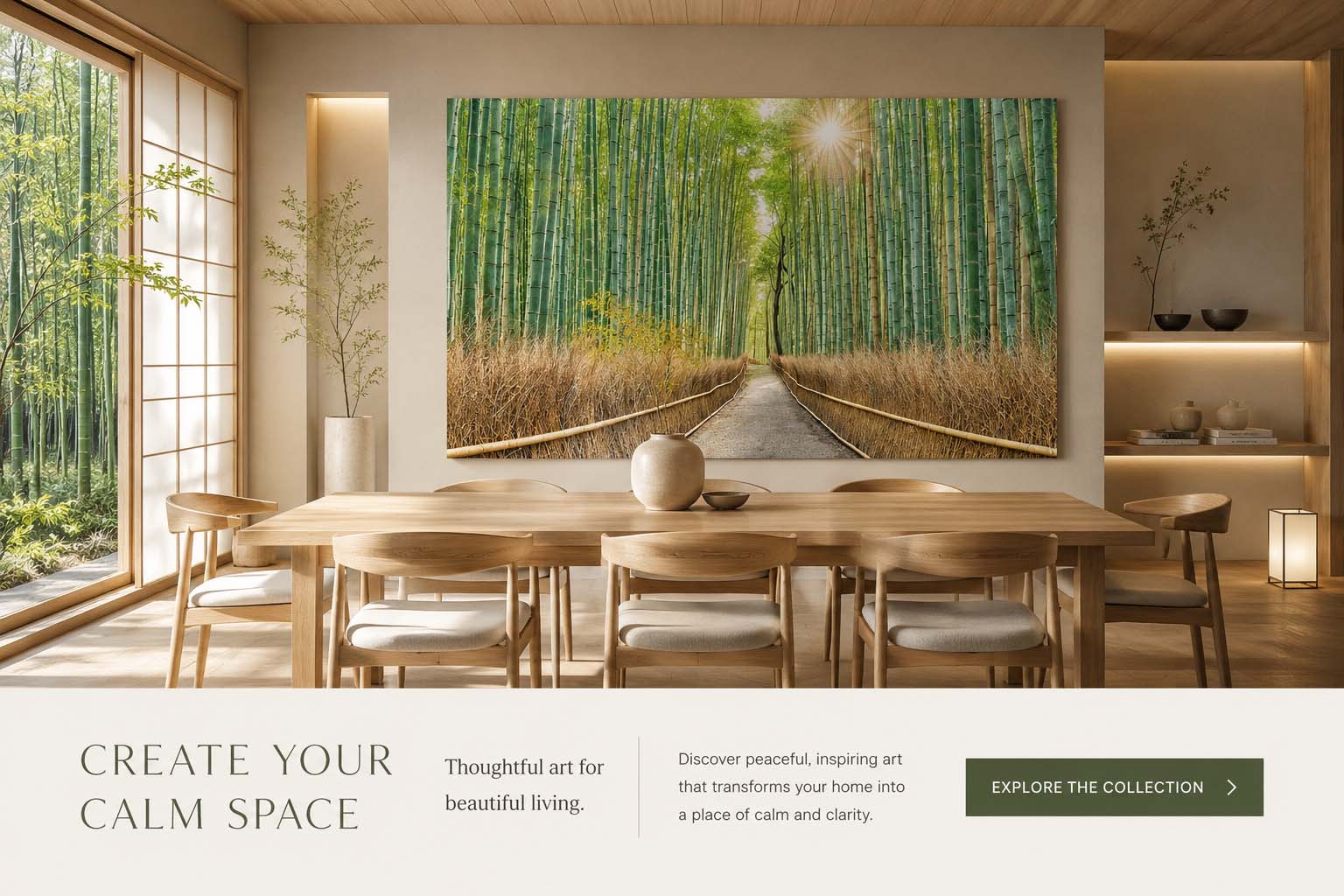
Find the Perfect Art for Your Dining Room
The best dining room wall art doesn't simply fill an empty wall.
It helps create the atmosphere of the room.
Whether you're looking for a dramatic Maui sunset, peaceful coastal photography, an abstract ocean scene, a panoramic landscape, or an oversized statement piece, choose artwork that adds beauty to the space while creating an emotional connection.
Explore my collection of museum-quality fine art landscape photography from Maui, Hawaii, and destinations around the world, available as Acrylic Facemounts, HD Metal Prints, and Canvas Facemounts in sizes ranging from intimate pieces to dramatic large-format installations.